Forex
Gold is approaching $4,500, buoyed by central bank purchases
Gold is hovering near the $4,500 resistance level, driven by massive central bank purchases and weakening expectations of U.S. rate hikes.
Rédaction ActuTradingil y a environ 1 mois
53 articles on inflation
Gold is hovering near the $4,500 resistance level, driven by massive central bank purchases and weakening expectations of U.S. rate hikes.
Several members of the Bank of Japan's Board of Governors expect prices to rise in the coming months. This could be a sign ahead of the next monetary policy decisions.

A prolonged closure of the Strait of Hormuz could plunge the United Kingdom into a recession. Geopolitical risks pose a direct threat to the British economy.

The price of gold has just surpassed the $4,000 mark. Tensions in the Middle East and expectations regarding the Fed's monetary policy are driving up the price of gold.

Gold is losing ground and has fallen back below the symbolic $4,000 mark as tensions in the Middle East reignite inflation fears and dampen hopes for a rate cut by the Fed.
The Fed's new chair warns: zero tolerance for inflation above 2%. A clear signal to the markets, which had been anticipating easing.
UBS expects the Fed to hold rates steady despite market expectations of a rate hike. Kevin Warsh downplays the inflation risk, but traders remain hesitant.
Inflation in the eurozone is slowing more than expected. The European Central Bank may adopt a more cautious stance in the coming months.

Christopher Kent, deputy governor of the RBA, warns that the Australian central bank could take a tougher stance on inflation. A major turning point for the AUD.
The ECB survey shows that eurozone consumers now expect lower inflation in 2027. This marks a major psychological turning point for the euro and interest rates.
Inflation in Tokyo rose in June, driven by energy prices. This acceleration is fueling renewed speculation about monetary tightening by the Bank of Japan.

The cancellation of U.S.-Iran negotiations is driving up crude oil prices. European bond yields are rising as a result.
Official figures for May show that inflation in Japan is under control, but energy subsidies mask very real underlying pressure.
The New York-based bank is revising its strategy in response to the Federal Reserve's tightening. The markets will have to wait until the fall of 2026 to see rates fall.

Gediminas Simkus, a member of the ECB’s Governing Council, announced that at least one more rate hike is on the way. Monetary tightening continues.

U.S. inflation has surpassed the 4% mark, and analysts predict increasing pressure on Bitcoin and gold. Nervous markets are anticipating a response from the Fed.
The Reserve Bank of New Zealand is continuing its fight against inflation despite a worrying rise in unemployment. It’s an increasingly delicate balance.

Hostilities are escalating in Iran. Oil prices are rising as negotiations stall and military tensions reach a new peak.

A member of the ECB Governing Council is calling for swift action against inflation. The message comes as the EUR/USD exchange rate remains stable at 1.1658.
Tokyo's inflation rate in May came in below expectations. The Bank of Japan may reconsider its plan to raise interest rates in June.

Faced with persistent inflation, investors are betting heavily on a sharp rise in the U.S. dollar. The Fed remains firm on its monetary policy.

Kevin Warsh takes the helm at the Fed amid a volatile situation: war with Iran, a FOMC that refuses to cut rates, and markets in panic mode. Not exactly the ideal start.

The conflict with Iran is driving up inflation in Europe. Traders are now betting on a surprise rate hike by the ECB by this summer.

The U.S. retailer reported better-than-expected results, with earnings per share exceeding expectations by $0.07. Sales are following the same upward trend.

Every decision the Fed makes regarding interest rates affects the cost of U.S. student loans, with a lag of a few months.
The U.S. president says the ceasefire with Iran is on life support. European stock markets are expected to open sharply lower on Tuesday.
Goldman Sachs has just pushed back its forecast for the Fed's first rate cut to December 2026. The reason: U.S. inflation, fueled by the war in Iran.

Oil prices have surpassed $110, while Nasdaq 100 futures are down 0.6% following OpenAI's struggles to attract new users and meet its sales targets.

Inflation in the eurozone rose from 1.9% in February to 3% in April. Gas, shipping, and fuel: all these costs have been on the rise since the start of the conflict in the Middle East.

American economist Peter Schiff argues that the sharp correction in precious metals does not call the uptrend into question. U.S. debt remains the structural driver.
Jerome Powell’s term as head of the Fed is coming to an end. Amid concerns about transitory inflation and a standoff with Trump, market experts are taking stock.

The Iranian currency has hit a new all-time low of 1.81 million rials to the dollar, a victim of U.S. military strikes and the naval blockade that are choking the economy.
The president of the New York Fed is warning about the conflict's impact: slowed growth and worsening inflation. Economic uncertainty is rising.
The ECB's internal survey shows that second-order inflation effects remain very limited in the eurozone. A relief for markets that are already anticipating what comes next.

Roland Lescure categorically rejects any tolls to cross the Strait of Hormuz, as Iran blocks this strategic passage. The G7 is concerned about the impact on global inflation.

Precious metals become essential again when confidence in money weakens. Find out why 2026 marks a major turning point for your savings strategy.
Rising energy prices prompt the Bank of Japan to revise its inflation forecasts upwards. A major turning point for Japanese monetary policy and the yen.
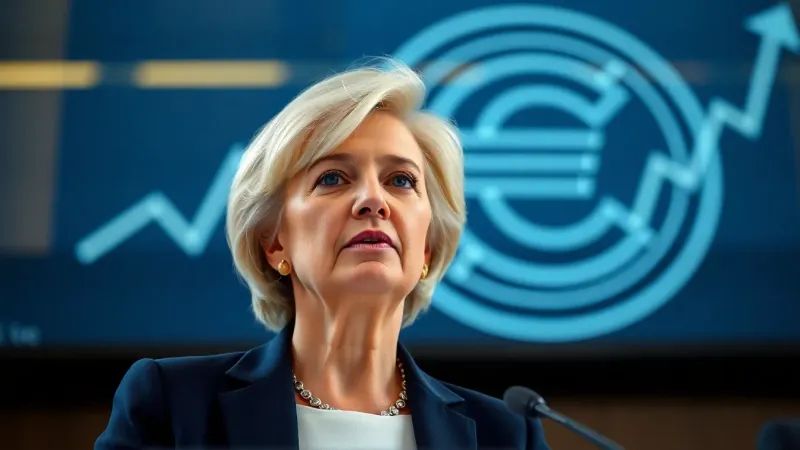
Lagarde asserts: the ECB will raise rates even if inflation proves temporary. A strong signal on European monetary strategy.

Gold is reaching record highs, while silver is under extreme pressure. Central banks hoard, investors turn to tangible assets: the monetary system resets.

US inflation refuses to fall and remains at 3%. A key signal for the Fed as geopolitical tensions intensify with Iran.

Lagarde confirms that the European Central Bank could raise interest rates, even if the expected rise in prices is not expected to last. A strong signal for the euro and bond markets.

Spot silver climbed to $77.73 an ounce, buoyed by a weakening dollar and hopes of peace between the United States and Iran. Silver miners follow suit.
The pound sterling is holding up well, closing in on its weekly highs. Meanwhile, the dollar awaits U.S. inflation figures, which could turn everything upside down.

Jerome Powell declares that inflation is under control and that no rate hike is justified, even in the event of an oil shock. A signal of stability for the markets.

An agreement between Iran and the United States boosts the French economy. OFCE forecasts growth of 0.8% in 2026 if energy prices return to normal.

The French government refuses to make a decision on fuel prices. The unions were calling for emergency measures, but only vague promises.
Goldman Sachs sees the Swiss franc gaining strength in the face of inflationary risks - USD/CHF is currently at 0.8006, and the movement could accelerate.

Oil flirts with $110 a barrel amid Trump's trade threats and tensions in the Strait of Hormuz - gold rallies, inflation threatens to return to haunt central banks.

Despite gasoline flirting with $4 a gallon, Wall Street is betting on Fed rate cuts rather than hikes - a shift in rhetoric that benefits all risk assets.

Energy facilities in the Middle East are damaged and repairs will take a long time. Meanwhile, Opep+ is increasing its quotas. What does this mean for your wallet?
After months of gains, GBP/USD collapses to 1.3204. A solid NFP report puts the Fed back in play and calls into question the Bank of England's trajectory. Analysis of a major break.

Banking giant Citigroup has taken a one-off charge of $124 million at its Irish hub in response to global economic uncertainties. This decision reflects the growing tensions on the markets.

After five years of persistent inflation, households are facing a substantial increase in their daily expenses. An analysis of the real impact beyond the official figures.