Gold down 2.73% against the stronger US dollar
The price of gold collapsed to $4,654.86 an ounce, losing $130.53 under the combined pressure of a stronger dollar and rising bond yields.
Commodities include physical assets traded on global exchanges: precious metals (gold, silver), energy (Brent and WTI crude, natural gas), industrial metals (copper, aluminum, nickel) and agriculture (wheat, corn, soybean, coffee, cocoa). They're often used as a hedge against inflation and geopolitical crises, with low or negative correlation to equities.
Gold (XAU/USD) remains the historical reference: it surpassed $4,800 per ounce in 2026 amid high sovereign debt and central bank demand (BRICS + Turkey, Poland, Singapore). Oil is pulled between global economic cycles (demand) and OPEC+ decisions (supply), with two benchmarks: Brent (Europe, North Sea) and WTI (US, West Texas Intermediate), typically spreading 2-5 USD apart.
ActuTrading Commodities covers energy catalysts (OPEC+ meetings, DOE inventories, geopolitical crises), gold/silver dynamics (central banks, US real yields), and energy-transition metals (copper, lithium, nickel) tied to decarbonization.
The ultimate safe-haven. Price, central banks, real yields and how to invest.
Read →The two global benchmarks, OPEC+, DOE inventories, geopolitical tensions.
Read →Copper, lithium, nickel: strategic materials of decarbonization.
Read →Hybrid precious metal, gold/silver ratio, solar boom.
Read →World economic barometer, energy transition and EVs.
Read →Henry Hub vs TTF, European energy crisis, LNG and geopolitics.
Read →Chicago and Euronext prices, Black Sea geopolitics, food security.
Read →Brazil/Vietnam, climate change, prices doubled in 2024.
Read →
The price of gold collapsed to $4,654.86 an ounce, losing $130.53 under the combined pressure of a stronger dollar and rising bond yields.

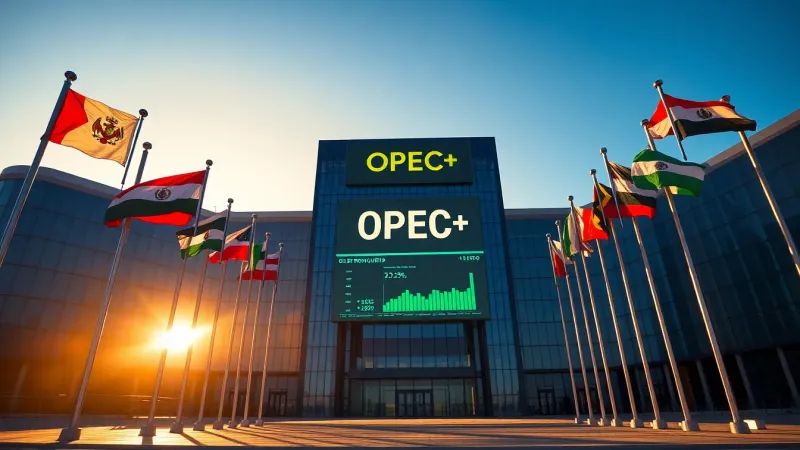
OPEC+ acts on a symbolic increase of 206,000 b/d for May, but Brent remains stuck at $109 - the closure of the Strait of Hormuz completely undermines the cartel's decision.