$310 billion. That’s the size of the stablecoin market, dominated by Tether and USDC—two American giants that are causing serious concern for Christine Lagarde. The ECB president has just issued an unambiguous warning: Europe must under no circumstances emulate this model. The tone is unprecedented. 🚨
🔍 What’s happening?
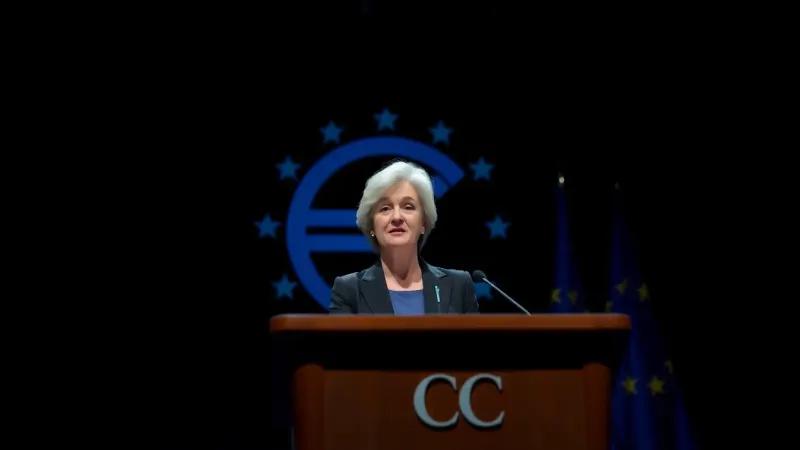
Christine Lagarde, President of the European Central Bank, has warned of the risks that large-scale stablecoins pose to European financial stability. She specifically points to Tether and USDC, which account for the bulk of a market now valued at $310 billion.
According to her, these stablecoins could transmit shocks to underlying asset markets during times of turmoil. Basically, if a panic breaks out and everyone tries to cash out at the same time, the system could collapse and spread to traditional markets.
Her message is clear: Europe must develop its own digital euro with a strict regulatory framework, rather than letting private U.S. players dictate the monetary rules of the game on the Old Continent.
💡 Why does this matter?
For us crypto traders, this is a major signal. If the ECB takes a tougher stance on U.S. stablecoins, we can expect usage restrictions in Europe, or even reserve requirements far stricter than what exists today.
This directly impacts how we trade. Tether and USDC are our main channels for entering and exiting positions, arbitraging between exchanges, and parking cash while waiting for the right moment. If Europe imposes heavy restrictions or promotes its own digital euro, we may need to rethink our habits and platforms.
The macroeconomic context also plays a role: with inflation under close watch and geopolitical tensions rising, central banks want to maintain control over currency. Allowing private entities to issue quasi-currencies totaling 310 billion is tantamount to losing some of that control.
📊 Our take
In our view, Lagarde is fundamentally correct. Centralized stablecoins are a regulatory time bomb.
Tether and USDC work well as long as everything is going smoothly, but their opacity (especially Tether) and concentration pose a real systemic risk. In the event of a bank run, no one knows exactly what would happen. Are the reserves really there? Are they liquid? No one has access to real-time audits. On the European side, the AMF and ESMA have already begun tightening the screws with the MiCA regulation, which imposes much stricter capital and transparency requirements. If the ECB launches its digital euro with a clear framework, we could see a gradual shift in trading volumes toward this regulated alternative. For French traders, this means anticipating market fragmentation: MiCA-compliant platforms on one side, offshore exchanges on the other. We recommend prioritizing regulated European exchanges now to avoid unpleasant surprises.
We’re betting that by 2027, the digital euro will be a reality, and US stablecoins will either have to comply with MiCA or lose access to the European market. In practical terms: diversify your stablecoins, keep an eye on ECB announcements, and get ready to switch to the digital euro as soon as it becomes available for trading.
✅ Key takeaways
- Christine Lagarde warns of the risks of stablecoins dominated by Tether and USDC
- The stablecoin market is worth $310 billion, a systemic risk according to the ECB
- Europe wants its digital euro to maintain monetary control against U.S. players
- The MiCA regulation already imposes strict constraints on stablecoins in Europe
- French traders must anticipate a split between regulated and offshore exchanges
What do you think? Do you trust US stablecoins, or are you waiting for the digital euro to secure your positions?
🔎 See also
For more in-depth analysis, check out all our crypto insights on ActuTrading Crypto 📈
Source: ECB, CoinDesk