What is leveraged trading?
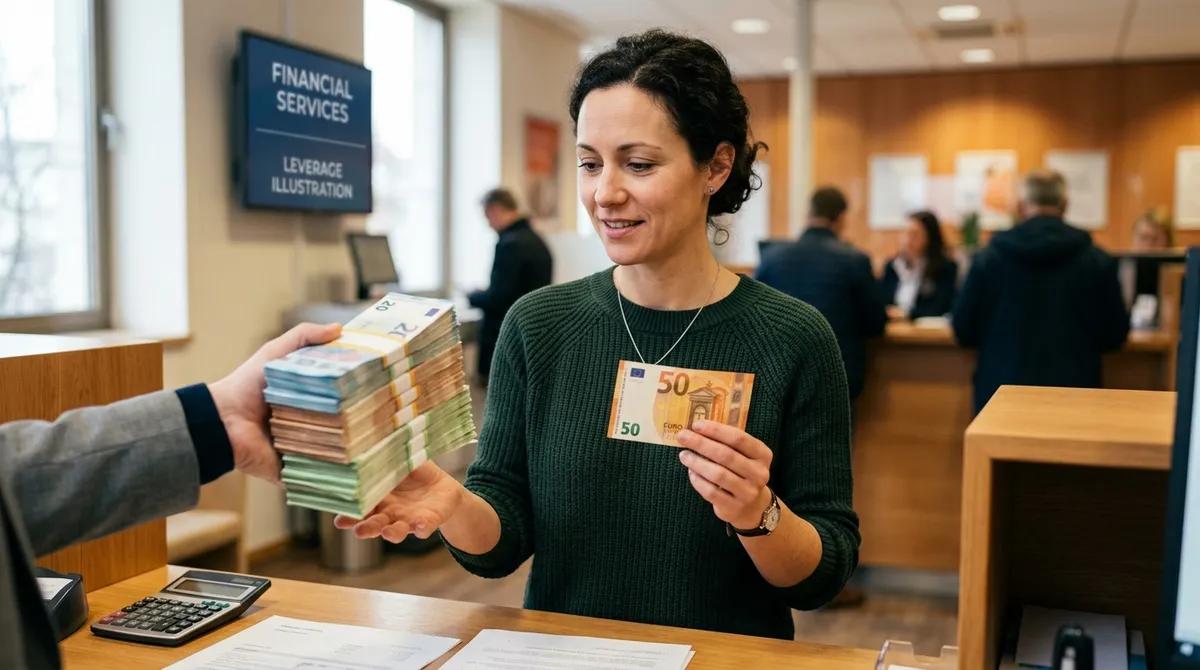
Leveraged trading is a method that allows you to take positions larger than the capital you actually own.
In other words, you can control a large sum with a small amount of your money.
You can think of it as a multiplier. Your capital serves as a base, and leverage amplifies your exposure to the market.
For example, with a small sum like €50, it's sometimes possible to open a much larger position, like €250, €500 or more, depending on the level of leverage used.
This possibility makes trading more accessible, but also more sensitive to market movements.
A very simple explanation to understand
Imagine you want to buy a fairly expensive item, but you don't have enough money to pay for it in full. A friend agrees to lend you the rest so you can make the purchase now.
In trading, the broker plays a similar role. He doesn't give you the money for free, but he allows you to use more buying power than your initial capital. This "temporary help" is called leverage.
How does leverage work in practice?
When you trade with leverage, you use only part of your capital to open a position. This part is called margin. The rest is "topped up" automatically to increase the total size of your trade. The higher the leverage, the greater your exposure relative to your actual capital.
Simple example
You have €80 in your account
You use a leverage of 5:1
You can open a position equivalent to €400If the market moves in your favor, your gain is calculated on €400 and not €80, but if the market moves against you, the loss is also calculated on this same basis
This is what makes leverage powerful but risky
Why do traders use leverage?
One of the main reasons is capital optimization. Without leverage, market movements can generate relatively small gains.
With leverage, even a small price change can produce a more significant result.
This enables traders to:
take advantage of small movements
optimize their capital
access larger markets
diversify their positions
A little anecdote to better understand
Imagine two people watching the same market. The first invests without leverage. She has to wait for a big move to get an interesting gain. The second uses leverage. She can react to small movements and generate faster results. However, this second person needs to be much more careful, as losses can also accumulate quickly. This shows that leverage is a powerful tool, but one that requires discipline.
The most important point to understand
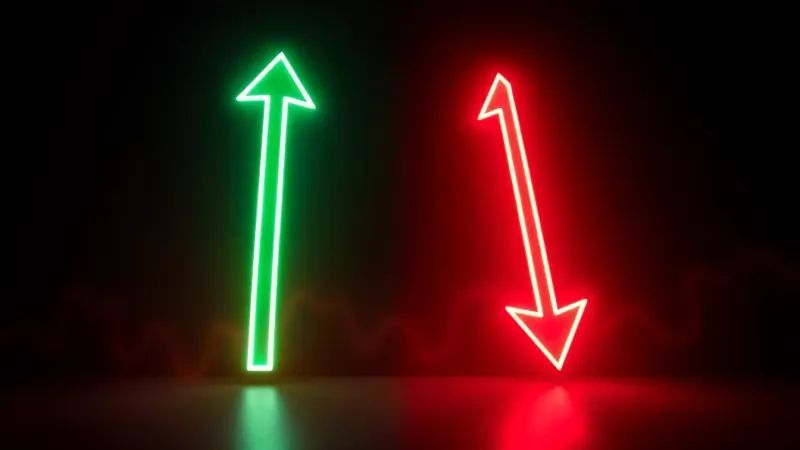
Leverage doesn't just increase gains. It also increases losses.
It's a common mistake among beginners to focus solely on profit potential without considering the associated risk.
If the market moves in the wrong direction, losses can be swift and significant. This is why risk management is essential when using leverage.
What is a margin call?
A margin call is a situation in which your capital becomes insufficient to hold your position open. When this happens, the broker sends you an alert. If you don't react, it may automatically close your position to prevent your balance from going negative. In practice, this means that your trade is partially or totally liquidated. It's a protective measure, but it can come as a surprise to traders who don't monitor their positions sufficiently.
Concrete example to visualize
Without leverage:
You invest €100
The market rises 1%
You earn €1
With leverage:
You use a leverage of 10:1
You control €1,000
The market rises by 1%
You gain €10But if the market falls by 1%:
You lose €10
This example clearly shows that leverage acts as an amplifier in both directions.
On which markets is leverage used?
Leverage is used on several types of financial markets:
The forex market, which concerns currencies such as the euro and the dollar
Cryptocurrencies, such as Bitcoin or Ethereum
Stock market indices, such as the CAC 40 or the NASDAQ
Commodities, such as gold or oil
These markets are highly liquid and enable the use of leveraged derivatives.
Leverage and derivatives
In many cases, leveraged trading isn't about actually owning the asset. Instead, you trade a contract that tracks the price of that asset. This allows you to speculate on price variations without having to physically buy the asset. This operation is what makes leverage flexible and accessible across different asset classes.
Is leveraged trading risky?
Yes, and even highly so.
Leverage increases the speed at which your capital can move, both up and down.
A seemingly small market movement can have a big impact on a leveraged account.
This is why many experienced traders regard leverage as a tool to be handled with caution.
Frequent beginner mistakes
Many beginners use too much leverage right from the start.
They take positions that are too large in relation to their capital.
They neglect the use of stop loss.
They don't correctly calculate the risk per trade.
These mistakes can lead to a rapid loss of capital.
Practical tips for getting started
Start with low leverage to better control your exposure
Never invest all your capital in a single position
Systematically use a stop loss to limit losses
Test your strategies on a demo account before going live
Learn to manage your risk before seeking profit
A more professional view of leverage
Professional traders don't use leverage to "earn faster" only.
They use it as a capital management tool.
Leverage allows them to adjust the size of their positions according to the risk they are willing to take.
In a serious approach, leverage is therefore secondary to risk management.
Understanding leverage in an overall strategy
Leverage should never be used in isolation. It is part of a whole that includes:
market analysis
capital management
emotional discipline
trading strategy
A good trader focuses not just on leverage, but on his entire approach.
To remember
Leveraged trading makes it possible to increase position size with reduced capital
It can amplify gains but also losses
It relies on a margin mechanism provided by the broker
It requires good risk management
It is used on many financial markets
Conclusion
Leverage is a powerful tool that can enhance trading opportunities, but it must be used with understanding and caution.
It's not a shortcut to becoming profitable quickly, but rather a strategic lever that requires rigor.
By mastering how it works, understanding its risks and applying good capital management, it becomes a real asset in a structured and thoughtful trading approach.
Video to go further: https://www.youtube.com/watch?v=gCPbKUHXsM0
🎬 Pour aller plus loin
Si tu veux approfondir ce sujet et progresser en trading, retrouve nos vidéos éducatives gratuites sur La Trading School 🎥