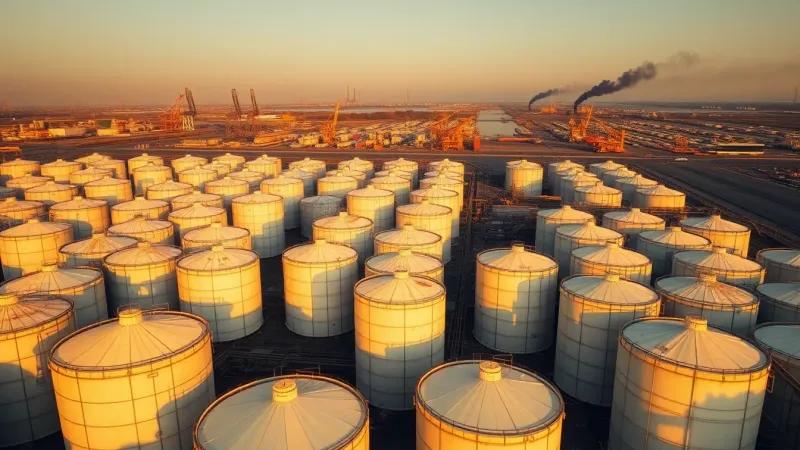
Global oil reserves are nearing depletion as the war in Iran enters its fourth month. Strategic reserves in Western countries have dwindled by several hundred million barrels since February. This is unprecedented since the 1973 crisis. ⚠️
🔍 What’s happening?
The Strait of Hormuz remains partially blocked, cutting off 20% of the global crude oil supply. OECD countries have drawn heavily on their strategic reserves to stabilize prices.
But this strategy is running out of steam. U.S., European, and Asian stocks are reaching levels considered critical by international energy agencies. Every additional week of conflict brings markets closer to a situation of actual physical shortage.
💡 Why does this matter?
For forex traders, this is a major signal for commodity-linked currencies. The Canadian dollar (CAD) and the Norwegian krone structurally benefit from oil price volatility. At the time of writing, USD/CAD is trading at 1.3753, but the downtrend could accelerate if inventories continue to dwindle.
In Europe, a sustained surge in energy prices is seriously complicating the ECB’s task on inflation. The eurozone imports 90% of its oil. A supply disruption would force Christine Lagarde to choose between a sharp economic slowdown and another rate hike.
📊 Our view
We are facing a geopolitical risk that far exceeds the usual tensions in the Middle East. Strategic reserves are the last safety net. When they run out, markets panic.
Our analysis points to a structural strengthening of oil-exporting countries’ currencies (CAD, NOK) and a weakening of the euro against the dollar. The Fed can weather an oil shock thanks to U.S. shale production. The ECB cannot. Current market data (EUR/USD at 1.1620) does not yet reflect this scenario. In our view, a drop back below 1.15 becomes likely if the conflict drags on beyond June. In France, the AMF is closely monitoring speculative positions in oil futures contracts, but it is primarily the Ministry of Finance that will bear the brunt, with deficits skyrocketing due to energy subsidies.
Our base case scenario anticipates a diplomatic resolution by the end of June; otherwise, we enter uncharted territory. For French traders: prioritize short EUR/CAD positions and remain very cautious on European risk assets until inventories are replenished.
✅ Key Takeaway
- Global strategic oil reserves are nearing depletion after four months of conflict
- The blockade of the Strait of Hormuz cuts off 20% of the global crude oil supply
- Currencies of oil-exporting countries (CAD, NOK) are structurally benefiting from the situation
- EUR/USD could fall back below 1.15 if the conflict extends beyond June 2026
- The ECB faces an inflation-growth dilemma not seen since the 1970s
What do you think? Do you anticipate a quick resolution to the conflict, or are you already positioning yourself for a prolonged supply disruption?
🔎 See also
For more insights, check out all our Forex analyses on ActuTrading Forex 📈
Source: ForexLive, international energy agencies