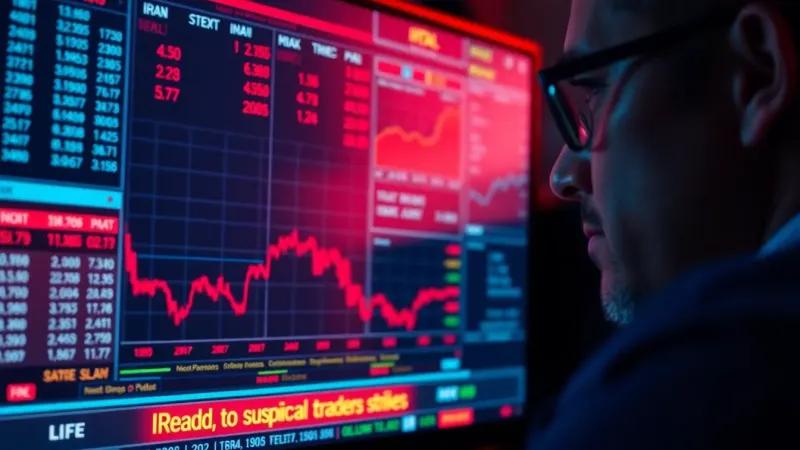
More than a billion dollars in bets placed with almost surgical precision on developments in the Iran war. Bets that predicted the air strikes of February 27, the assassination of the Supreme Guide, and even the fall in oil prices just before the ceasefire was announced. Too many coincidences to be pure chance. 📍
🔍 What's going on?
On online betting markets like Polymarket and Kalshi, traders have pulled off some spectacular moves. On February 26 the day before the air strikes about 150 accounts placed $855,000 in bets predicting a US strike against Iran the following day. Result: 16 accounts each pocketed more than $100,000.
A few weeks later, an anonymous user dubbed "Magamyman" pulled off an even more audacious stunt: he bet that Supreme Leader Ayatollah Khamenei would be "eliminated from power" just before his assassination by an Israeli air strike, pocketing more than $553,000 in the process.
The most suspicious timing? On April 7, just before Donald Trump announced a temporary ceasefire, traders bet $950 million that oil prices would fall. And that's exactly what happened.
<💡 Why does it matter?
These bets raise a burning question: where did this information come from? If some traders had access to non-public data on impending military operations, that's pure insider trading. Except that, unlike the conventional stock market, betting markets on political and geopolitical events are barely regulated.
Members of Congress and US federal agencies are beginning to wince. The problem: the proliferation of online betting platforms makes it almost impossible to track suspicious flows. It's become all too easy to bet on any news event and remain anonymous.
📊 Our opinion
We can't ignore the obvious. These bets are not lucky trading - it's either real statistical bad luck (almost impossible), or someone had information they shouldn't have. The total lack of regulation on these markets creates a perfect playground for those who have access to the info before anyone else.
For the average trader, it's a stark reminder: alternative markets (betting, off-exchange commodity derivatives) don't play on a level playing field. If you don't know who's in front of you and what the true level of regulation is, you're playing a game where the dice could be loaded.
✅ To remember
$1+ billion in "well timed" bets on the Iran war in 2026
Bets predicting air strikes, assassinations, oil crises
Polymarket and Kalshi: poorly regulated, anonymity possible, insider risk
Regulators call for real anti-insider trading legislation
For you trader: watch out for unsupervised alternative markets
And what do you think? In your opinion, how can regulators really curb this suspicious type of trading without crushing the innovation of betting markets?
🔎 Also to be read
To delve deeper into our analyses of the risks and opportunities of non-traditional markets, find all our Equity and Markets analyses at ActuTrading 📈